
A buyer may first encounter a fine home on a phone screen, but their judgement begins in seconds. The best luxury property photography tips are not about making a house look grander than it is. They are about revealing its proportions, craftsmanship and atmosphere with enough honesty that the right buyer wants to experience it in person.
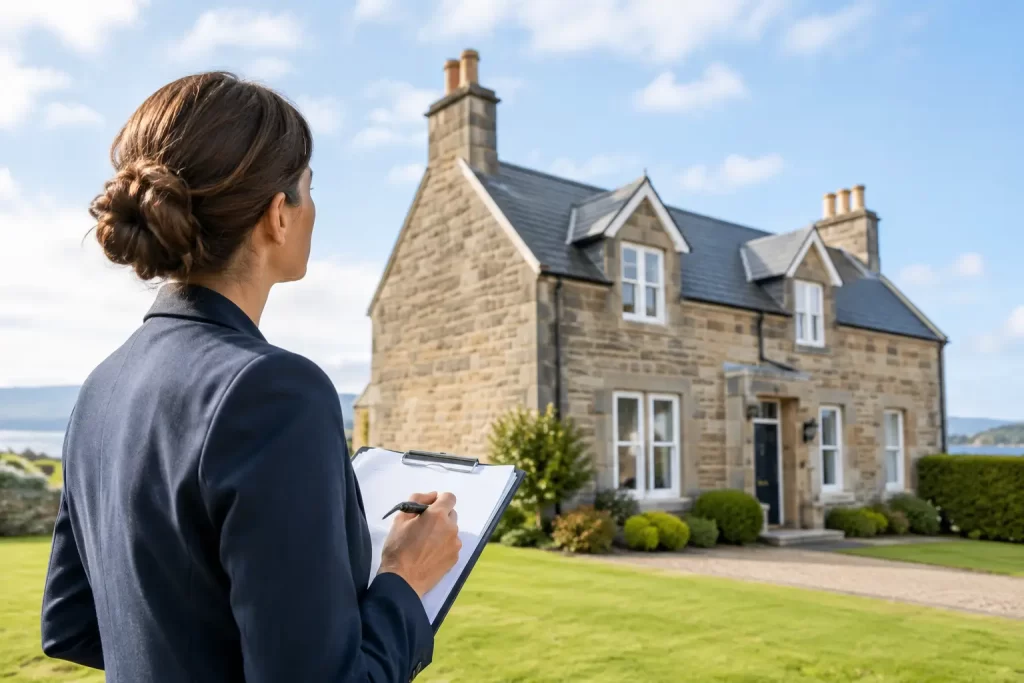
For distinctive homes, photography is not an administrative step before a listing goes live. It is part of the positioning. A period villa in Bridge of Allan, a contemporary waterfront home near South Queensferry or a carefully restored country house each calls for a different visual approach. The common aim is to create a composed, credible first impression that reflects the standard of the property itself.
Start with the story, not the camera
Every successful shoot begins by identifying what makes a property memorable. It may be the quality of natural light in a south-facing kitchen, the symmetry of a Georgian drawing room, a landscaped garden that extends the living space, or a far-reaching view that explains the setting immediately.
Before photography takes place, walk through the home and consider how a prospective buyer will move through it. The strongest image should establish the property’s character, while the following photographs should build a clear sense of scale, flow and daily life. A collection of attractive but disconnected rooms can feel decorative. A considered sequence gives buyers a reason to keep looking.
This is especially relevant for homes with individuality. Original cornicing, stone fireplaces, bespoke joinery and architectural glazing should be photographed as part of a wider narrative, rather than as a series of isolated details. Detail images have their place, but they should support the story rather than replace it.
Prepare every room with purpose
Even beautifully maintained homes benefit from preparation. Photography notices what the eye has learned to overlook: a crowded worktop, mismatched towels, cables beneath a television or a collection of family photographs that draws attention away from the room itself.
The intention is not to remove all personality. A home should still feel lived in, warm and plausible. Instead, edit the room until its best features have space to register. In a kitchen, this may mean clearing most small appliances and leaving one simple arrangement on an island. In a sitting room, it may mean adjusting furniture so that a fireplace, bay window or garden outlook becomes the natural focal point.
Bedrooms often need the most restraint. Fresh, well-fitted bed linen, clear bedside tables and balanced cushions will read far better than excessive styling. Bathrooms should feel immaculate and calm, with personal products removed and mirrors cleaned carefully. Fresh flowers or a restrained branch arrangement can add life, but elaborate props can quickly feel staged.
Outside, presentation matters just as much. Bins, hoses, children’s equipment and parked cars can distract from a handsome façade or generous driveway. Gardens need not be in full summer bloom to photograph well, but paths should be clear, lawns neat and key seating areas ready to be enjoyed.
Use light to show atmosphere and scale
Natural light is usually the most flattering starting point, particularly in Scotland, where the quality of daylight can be soft, changeable and beautifully directional. Open curtains and blinds fully where privacy allows, then assess each room at the time it will be photographed. A west-facing reception room may be at its best later in the day, while a bright kitchen can be more balanced in the morning.
Good interior photography balances daylight with the existing lighting rather than flooding every room with artificial brightness. Lamps can add warmth and depth, particularly in formal reception rooms or bedrooms, but every ceiling light does not need to be switched on. Mixed lighting can produce unflattering colour casts when handled without care.
A skilled photographer will manage difficult conditions, including bright windows and darker interiors. Avoid trying to solve this by overexposing a room or heavily editing the view beyond the glass. Buyers value a home that feels bright, but they also need an accurate impression of its outlook and orientation.
Choose the weather with care
A bright, lightly clouded day is often ideal for external photography, giving a home definition without deep shadows. Sunshine can be excellent when it illuminates the front elevation or garden, but harsh midday light may make a façade appear flat or force dark shadows across important features.
Weather should suit the property rather than follow a fixed rule. A rural home may look particularly compelling with soft light and a little movement in the landscape. A contemporary home with extensive glazing may benefit from a crisp, clear day. If a view is central to the sale, visibility should take priority over a diary date.
Luxury property photography tips for composition
Wide-angle photography is valuable, but it requires restraint. Excessively wide lenses can make rooms appear distorted, stretch furniture and create expectations that are unlikely to match a viewing. Premium marketing depends on trust, and realistic proportions are part of that trust.
The most effective compositions use clean lines, thoughtful symmetry and a clear focal point. A photographer may shoot from a doorway to show how rooms connect, position the camera to emphasise ceiling height, or use foreground detail to draw the eye towards a view. These choices should make the architecture easier to understand, not turn it into a visual trick.
Not every image needs to show an entire room. A close frame of an original staircase, hand-crafted cabinetry or a beautifully detailed window can communicate quality in a way that a wider view cannot. The balance matters. Buyers still need enough comprehensive photography to understand the accommodation before arranging a viewing.
For larger homes, avoid repeating near-identical angles. Each photograph should earn its place by revealing a distinct room, perspective or feature. This creates a more editorial presentation and respects the buyer’s time.
Photograph the lifestyle without inventing one
Exceptional homes are often purchased for how they allow people to live, as much as for their room count. A breakfast table set near garden doors, a fire lit in a country sitting room or a terrace prepared for an early evening gathering can help buyers imagine themselves there.
However, lifestyle styling should be light-touch. It works best when it grows naturally from the property and location. A country kitchen might suit a simple table setting; a city townhouse may call for an elegant but understated approach. Avoid props that feel unrelated to the home or overly seasonal, as they can date the marketing and distract from the architecture.
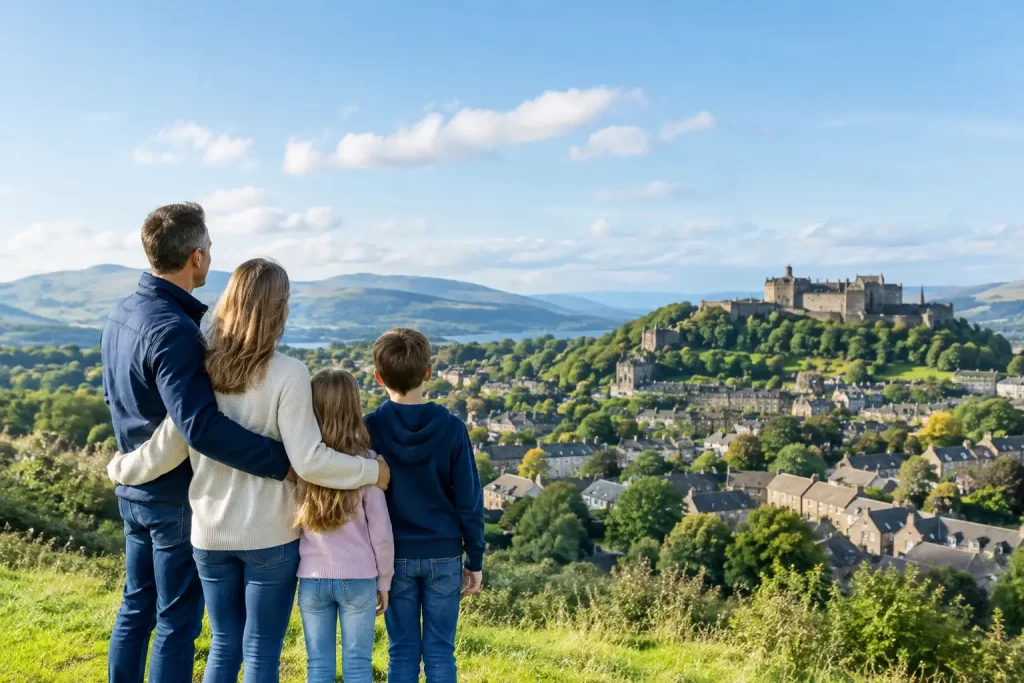
Views and outdoor spaces deserve equal consideration. If a property has a private garden, mature grounds, a lochside setting or an expansive terrace, these should not be treated as supporting images. They are often among the reasons a buyer will choose one home over another.
Consider twilight photography selectively
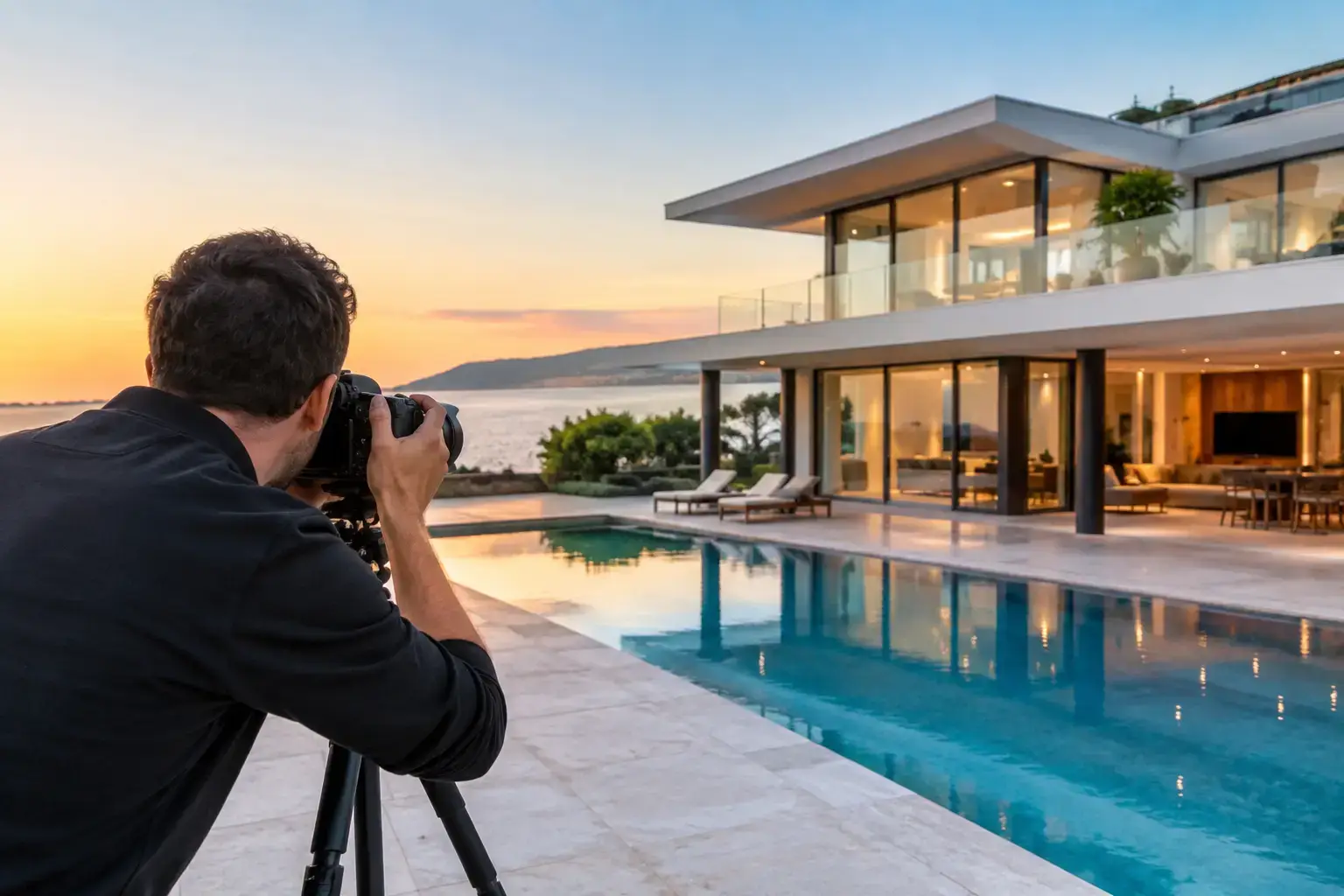
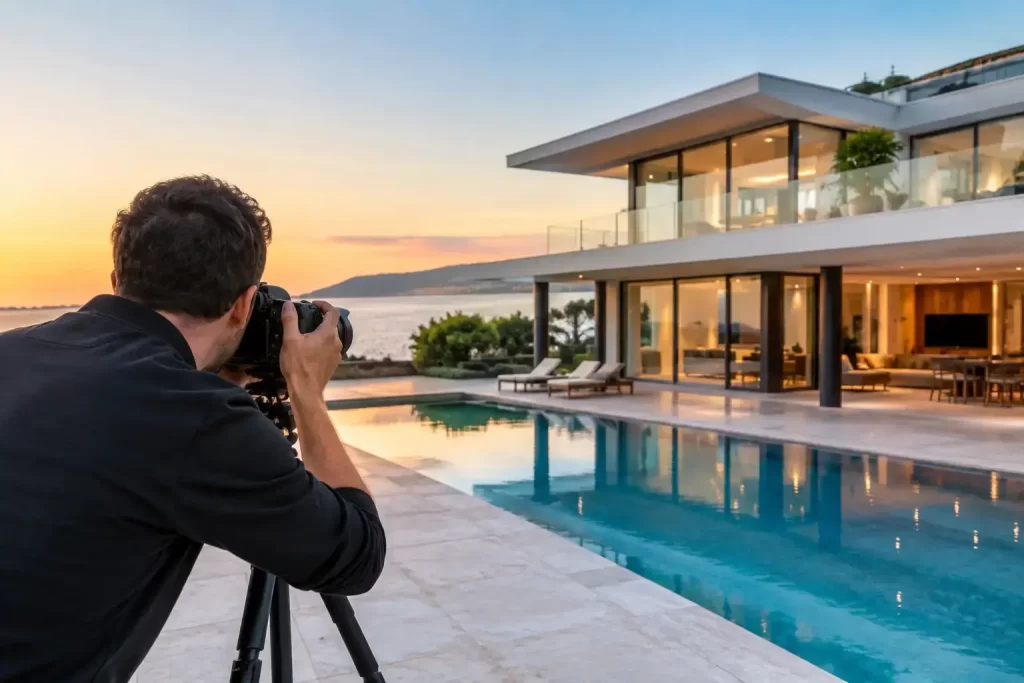
Twilight images can be striking, particularly for homes with considered exterior lighting, generous glazing or a strong garden setting. The warm interior glow against a blue evening sky can create a memorable lead or closing image.
It is not essential for every property. A modest exterior may look more natural in daylight, while a home whose principal appeal is its countryside view should be photographed when that view is clear. Twilight should enhance an already strong presentation, not compensate for weak preparation or unsuitable daytime images.
Edit with restraint and accuracy
Professional editing is essential, but it should be largely invisible. Colour correction, balanced exposure, straight vertical lines and removal of minor temporary distractions all contribute to a polished result. What should never happen is a substantial alteration of the property’s character, condition, outlook or boundaries.
Over-saturated skies, unnaturally green lawns and heavily brightened interiors can make a listing feel less credible. The same applies to retouching out neighbouring buildings, changing a view or using images that no longer reflect the season or state of the property. A viewing should confirm the buyer’s interest, not reset their expectations.
At Halliday Homes Collection, enhanced presentation is considered as a whole: photography, wording, styling and the order in which a home is introduced all need to feel consistent. A considered image set should make the accompanying property description more meaningful, and vice versa.
Give the photographer the right brief
The homeowner’s knowledge is valuable. Before the shoot, share the rooms that receive the best afternoon light, the garden feature that comes into its own in spring, the view that visitors always notice and any architectural details that may otherwise be missed. This is not about directing every frame. It helps the photographer understand what matters.
Equally, allow enough time. Rushed photography is rarely flattering, particularly in larger or more detailed homes. A full shoot may involve revisiting a room as the light changes, waiting for an exterior shadow to move or capturing a second set of images at dusk. It is a worthwhile investment when presentation has a direct bearing on the quality of enquiries a property attracts.
The finest property photography does not ask buyers to suspend disbelief. It gives them a truthful, well-composed sense of what it might feel like to arrive, look around and decide that this could be home.