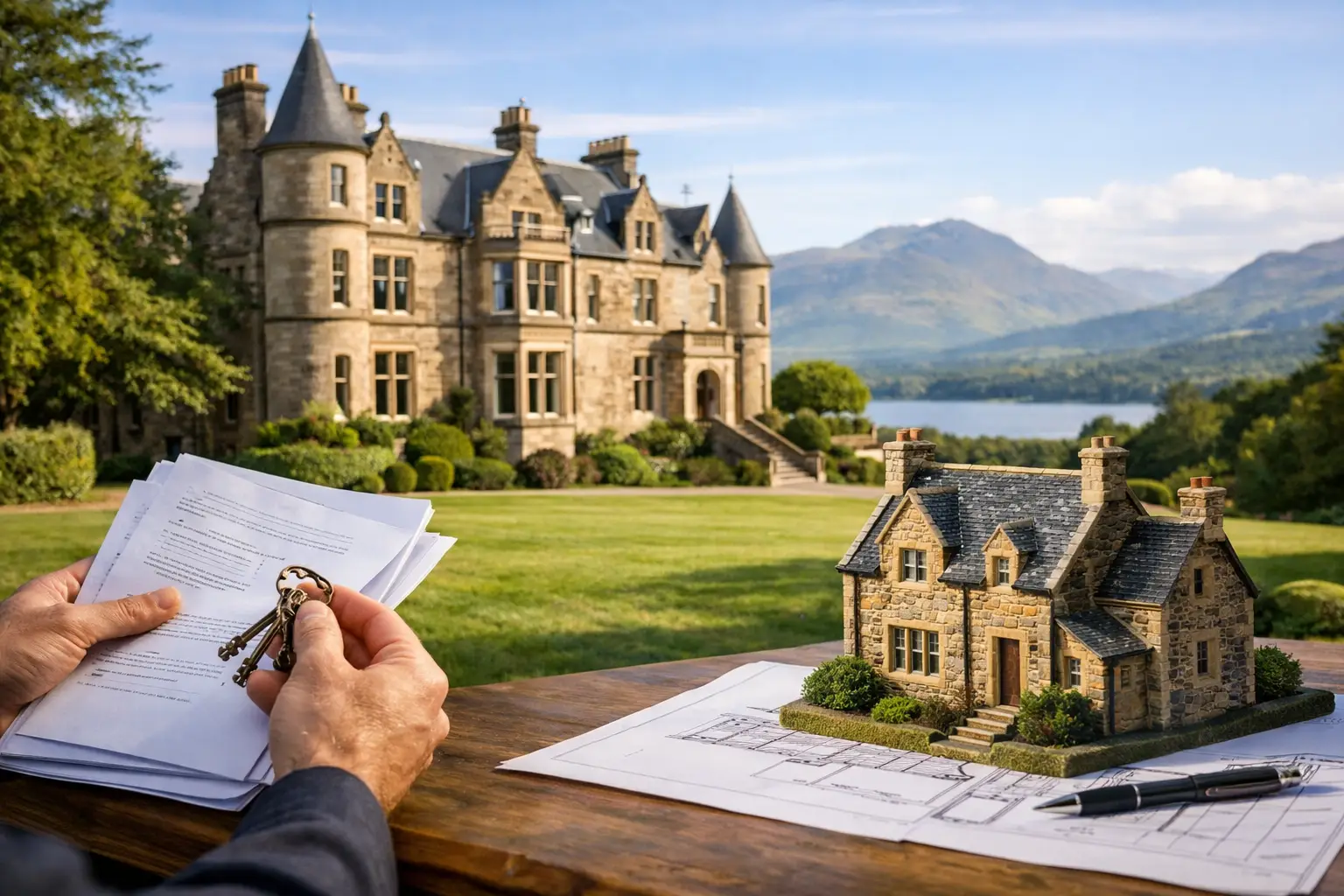

The original sash windows, stonework and sense of permanence can make a listed home feel unlike any other. Yet a guide to buying listed buildings should begin with one clear point: you are not simply acquiring a beautiful property. You are taking stewardship of a piece of Scotland’s architectural heritage, with responsibilities that deserve careful consideration before an offer is made.
For the right buyer, that responsibility is part of the appeal. From a Georgian townhouse in Stirling to a country house near Auchterarder or a distinctive period cottage in the Forth Valley, listed homes offer provenance, craftsmanship and character that cannot be replicated. A well-advised purchase, however, depends on understanding the building, the paperwork and the likely cost of caring for it.
What listing means for a Scottish home
A building is listed because it has special architectural or historic interest. Historic Environment Scotland is responsible for listing, while the relevant local authority administers many of the consents required for alterations. In Scotland, listed buildings are generally categorised as A, B or C(S).
Category A covers buildings of national or international importance. Category B applies to major examples of a particular period or style, while Category C(S) usually recognises buildings of local importance. The category offers a useful indication of significance, but it should not be treated as a simple scale of how difficult a property will be to own. The detail of the listing, the condition of the house and the work proposed all matter.
Importantly, listing can extend beyond the principal house. Boundary walls, gates, outbuildings and structures within the curtilage may also be protected, particularly where they pre-date 1948. Never assume that a modest stone store, former coach house or garden wall can be altered without discussion simply because it is not named in the sales particulars.
Guide to buying listed buildings: investigate before offering
A listed property warrants deeper due diligence than a conventional modern home. The most effective approach is to gather specialist advice early, ideally before committing to a purchase or at least while your solicitor is negotiating the missives.
Begin by reading the official listing description. It can identify the features that contribute most to the building’s significance, such as a slate roof, stair, interior cornicing, window pattern or original plan form. It is not, however, a definitive list of everything protected. Consent may be needed for work affecting the character of the building whether or not that feature is specifically mentioned.
A survey by a professional with proven experience of traditional Scottish construction is equally valuable. Older buildings behave differently from newer homes. Solid walls, lime mortar, suspended timber floors and natural slate roofs need an informed eye. A surveyor should distinguish between cosmetic ageing and defects requiring priority investment, while also considering damp, ventilation, timber decay, roof coverings, rainwater goods and previous inappropriate repairs.
Ask direct, documented questions of the seller and their agent about the property’s history. Your solicitor should establish whether listed building consent, planning permission and building warrants were obtained for past extensions, replacement windows, roof works or internal alterations. Missing approvals do not always prevent a purchase, but they may create delay, cost and uncertainty. The earlier they are identified, the more confidently you can price that risk into your decision.
Before proceeding, seek clarity on four practical points:
- the listing category, official description and extent of the protected curtilage;
- all consents and completion documents for previous work;
- known maintenance issues, including quotations or reports for major repairs; and
- any restrictions, shared responsibilities or conservation area considerations affecting the property.
Consent is part of the ownership journey
Listed building consent is usually required for works that affect a building’s character as one of special architectural or historic interest. This may include changing windows or doors, removing internal features, altering fireplaces, reconfiguring rooms, fitting solar panels or changing external finishes. Planning permission and a building warrant are separate processes, and a project may require one, two or all three.
Routine maintenance is not automatically free from consent requirements. Replacing like-for-like materials may sometimes be acceptable, but the detail matters. Swapping traditional single-glazed timber sash windows for uPVC, using cement mortar on stonework or replacing natural slate with a modern alternative can materially affect the building’s appearance and performance.
This need not mean living in a museum. Sensitive, well-designed improvements can often be supported, particularly where they preserve historic fabric and improve the home’s long-term sustainability. Energy efficiency in a listed building may involve a more considered combination of measures: draught-proofing, secondary glazing, loft insulation where appropriate, upgraded heating controls and carefully specified insulation. The right solution depends on the individual house, rather than a standard retrofit package.
Engaging an architect or conservation-accredited professional before designing substantial works can save both time and frustration. A good proposal explains why the change is needed, retains what is significant and uses materials that are appropriate to the age and construction of the building.
Budget for stewardship, not just renovation
Listed homes can be more expensive to repair, but that is not always the same as being expensive to own. A sensitively maintained property with a sound roof, well-managed rainwater and established repairs may be a far safer prospect than a neglected house with a lower asking price.
The key is to budget realistically. Specialist labour and traditional materials can command a premium. Bespoke timber windows, leadwork, lime plastering and slate repairs require skilled tradespeople, and their availability may affect the programme as well as the cost. Obtaining detailed quotations from contractors experienced in historic buildings is more meaningful than relying on broad online estimates.
Buyers should also allow a contingency for work uncovered once repairs begin. Historic fabric often contains surprises, particularly behind later linings or beneath roof coverings. This is where a thorough survey and a disciplined financial plan make a material difference.
Insurance deserves early attention too. Speak to a provider familiar with listed homes before missives are concluded, especially if the property is vacant, undergoing works or has unusual construction. Reinstatement values can differ considerably from market value, and the policy should reflect the cost of repairing with appropriate methods and materials.
Look beyond the house itself
The setting is frequently central to a listed property’s appeal and value. A home in a conservation area may be subject to additional planning controls, while private roads, shared drives, common repairs and historic boundary walls can all bring obligations that should be understood in full.
For flats within a listed tenement or converted villa, examine the condition of common parts with particular care. Roofs, stairwells, stone façades and drainage are collective responsibilities. Ask about the factor, any planned works, the level of the common repair fund and whether other owners are aligned on essential maintenance. A beautifully finished individual flat can still face a significant share of external repairs.
Equally, consider how the building suits daily life. Does the layout work for your family? Is there sufficient storage, parking and outdoor space? Can you heat the house comfortably and economically? Period homes reward buyers who see both the romance and the practical reality. Neither should be overlooked.
Choose advice that reflects the property
A successful listed-building purchase is rarely about moving fastest. It is about bringing the right people around the table: a solicitor alert to title and consent issues, a surveyor experienced in traditional construction, and, where needed, a conservation specialist, architect or contractor. Their advice should help you separate manageable maintenance from a problem that changes the value or viability of the purchase.
At Halliday Homes, we believe exceptional homes deserve representation that is as considered as the homes themselves. Local knowledge can be particularly valuable when assessing the character, setting and buyer demand of period property across Central Scotland, as well as the practical realities of owning it.
A listed building will ask more of its owner than a new-build house, but it can return far more than square footage. Approach the purchase with curiosity, proper professional advice and a budget that respects the building, and you can make a decision that protects both your investment and a remarkable home’s next chapter.