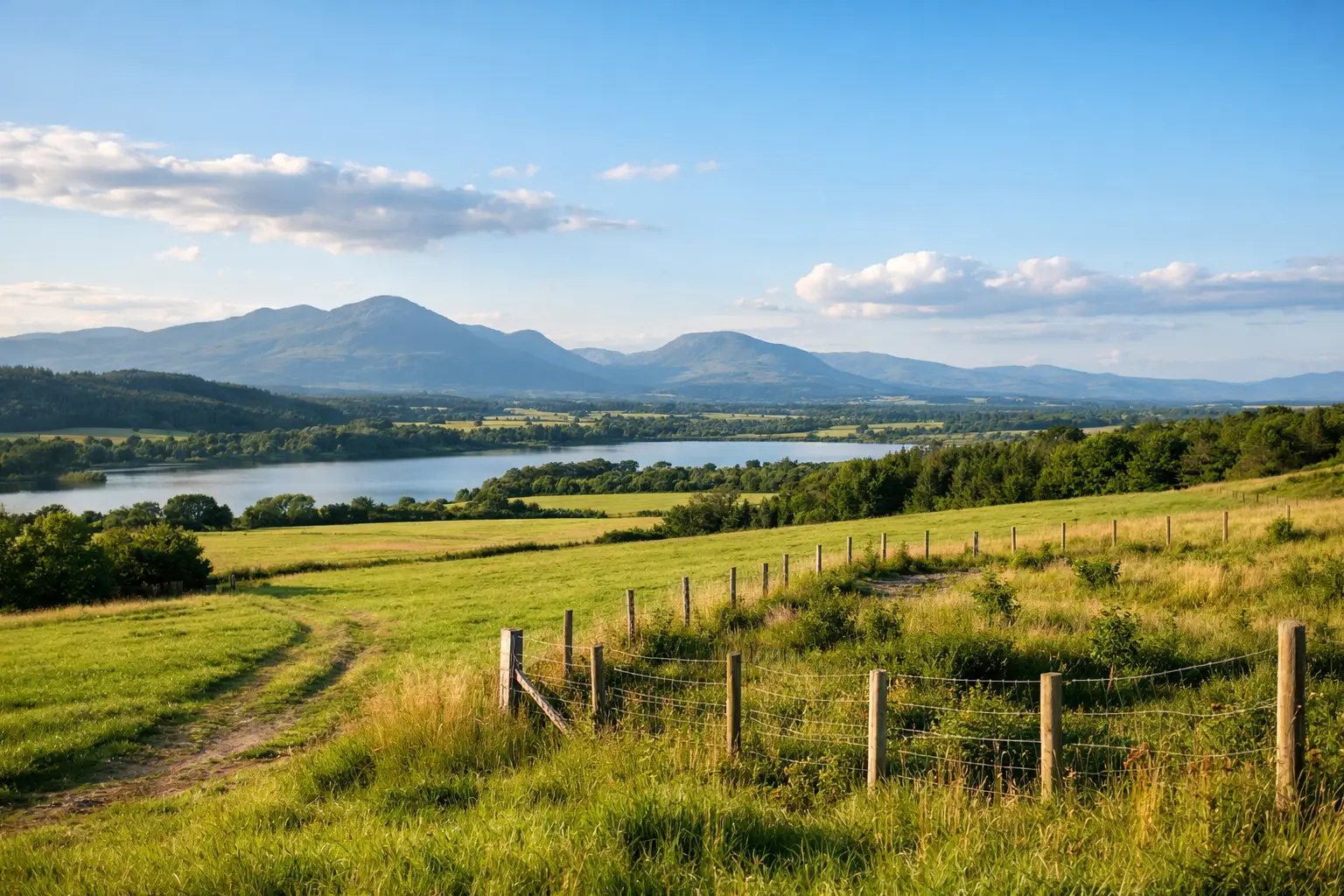

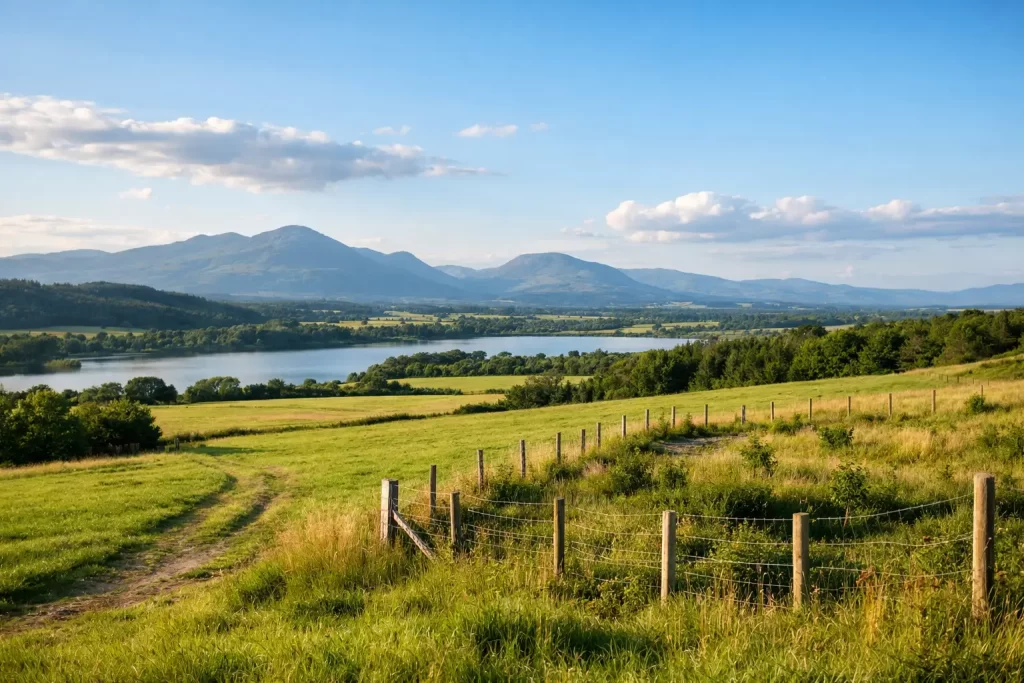
A promising plot can look deceptively simple. A few acres on the edge of a village, open views, good road access and the suggestion of future potential are often enough to spark strong interest. Yet when it comes to land for sale in Central Scotland, the real value is rarely found in the brochure alone. It sits in planning context, local demand, access, servicing, setting and the quality of advice guiding the purchase.
For buyers with ambition, whether that means building a private home, securing a development opportunity or acquiring land as part of a longer-term investment strategy, Central Scotland offers unusual breadth. It connects key commuter routes, established towns, sought-after villages and attractive rural fringes, all within a region where lifestyle appeal and practical convenience frequently meet.
Why land for sale in Central Scotland attracts such varied buyers
Central Scotland does not operate as a single market. That is precisely why it holds such appeal. Within a relatively manageable geography, buyers can consider edge-of-town plots in places with strong schooling and transport links, larger rural sites with privacy and outlook, and parcels of land that may suit strategic or phased development.
Areas around Stirling, Bridge of Allan, Auchterarder and Linlithgow draw interest for different reasons, but they share a common thread. Buyers are not simply purchasing ground. They are buying into a setting, a catchment, a pace of life and, in many cases, future resale strength.
For private purchasers, the attraction is often the opportunity to create a home that simply does not exist on the open market. For developers and investors, the focus is more commercial. Demand for well-positioned housing remains resilient in many parts of Central Scotland, particularly where stock is limited and buyer appetite remains strong for quality homes in desirable locations.
That said, land is never a uniform asset. Two sites with similar acreage can have entirely different prospects depending on planning status, topography and local policy. This is where measured, local advice matters more than headline pricing.
What really drives the value of a plot
The first question buyers ask is often about price per acre or guide price against comparable sales. Useful, certainly, but incomplete. Land value in this market is shaped by a series of practical and strategic factors.
Planning position is usually the clearest driver. A plot with consent for a well-designed dwelling is a very different proposition from land with only speculative potential. Even where a site appears suitable in principle, the route to consent can be influenced by settlement boundaries, local development plans, design constraints, access requirements and ecology.
Location remains just as influential. Land close to established towns or premium villages tends to command stronger interest, particularly where buyers can combine countryside appeal with efficient travel to Edinburgh, Glasgow, Perth or local business centres. Schooling, railway access and everyday amenities all feed into the final figure a buyer is willing to pay.
Then there is the character of the site itself. Orientation, views, privacy and gradient can all enhance desirability, but practical details carry equal weight. Buyers should look carefully at road access, drainage, utilities, ground conditions and neighbouring land uses. A picturesque plot can quickly become more expensive than expected if service connections are difficult or abnormal build costs emerge.
The difference between a self-build plot and a development site
Not all buyers are looking for the same outcome, and the market reflects that. A single-house plot often attracts a very different audience from a site with scope for multiple dwellings.
For self-builders, the emotional pull is usually stronger. They may accept a premium for a location that offers privacy, architectural opportunity or a particularly special outlook. Their decision-making still needs discipline, but the purchase is often rooted in lifestyle as much as return.
Developers and strategic investors are typically more analytical. Build costs, sales evidence, absorption rates, planning obligations and gross development value sit at the centre of the conversation. In stronger parts of Central Scotland, smaller schemes can perform very well, particularly where there is undersupply of high-quality family housing. But margins depend on detail, and seemingly modest constraints can materially affect viability.
This distinction matters because it shapes how land should be assessed and marketed. A plot that feels overpriced to a volume-minded buyer may still represent excellent value to a private purchaser seeking a one-off home in a tightly held location. Equally, a site with broad development potential may need patience and planning expertise before its full value is realised.
Where buyers tend to focus in Central Scotland
Demand is often strongest where quality of life and accessibility sit side by side. Around Stirling and Bridge of Allan, buyers are drawn by handsome surroundings, respected schooling and a well-established residential market. Linlithgow continues to appeal to purchasers who want strong connectivity and an attractive historic setting. Auchterarder and its surrounding countryside hold particular appeal for those seeking a more relaxed rural lifestyle without feeling remote.
Beyond these better-known locations, there are villages and edge-of-settlement opportunities across Central Scotland where value can look more compelling. Buyers willing to look slightly wider may find stronger plot sizes, better orientation or more manageable competition. The trade-off, naturally, may be fewer amenities on the doorstep or a longer commute.
That balance between prestige, convenience and value sits at the heart of many land acquisitions. The right choice depends on whether the buyer’s priority is immediate lifestyle, resale confidence, development margin or long-term appreciation.
Due diligence deserves more than a quick review
Land purchases reward care. They also punish haste. A polished marketing presentation can highlight potential, but serious buyers should interrogate the fundamentals before progressing too far.
Title matters. Boundaries, access rights, servitudes and any usage restrictions should be understood in full. Planning documentation should be reviewed with care, including any conditions or obligations that affect what can actually be built. If no consent is in place, buyers should be realistic about the distinction between possibility and probability.
Technical matters deserve equal attention. Ground investigation, flood risk, drainage strategy, utility availability and highways considerations can all influence both feasibility and cost. In some cases, these issues are perfectly manageable. In others, they can alter the economics of a site entirely.
This is also where a premium, relationship-led buying approach can add real value. Trusted local estate agents and advisers with close knowledge of Central Scotland’s planning environment, buyer demand and premium residential market can often identify strengths and weaknesses that are not obvious at first glance. Halliday Homes understands that successful land acquisition is rarely just about securing a site – it is about representing the client’s wider interests with discretion, clarity and commercial judgement.
The market outlook for land in the region
Well-positioned land continues to attract attention, particularly in locations where completed homes achieve healthy values and supply remains restricted. Demand has not disappeared, but buyers are more selective than they were during periods of looser sentiment. They expect clearer information, better pricing discipline and a realistic understanding of build costs.
That has created a more nuanced market. Excellent plots still generate strong competition. Average plots, or sites with unresolved complexity, can sit longer unless guide prices reflect the work still required. For sellers, this means presentation and strategy are increasingly important. For buyers, it means there may be opportunity in assets others overlook, provided the fundamentals support the vision.
Interest rates, construction costs and planning timescales continue to influence appetite, particularly for development-led purchases. Yet Central Scotland retains a structural strength that supports demand: it offers an attractive combination of landscape, connectivity and established residential appeal. In premium and aspirational locations, that matters.
Buying well means thinking beyond the site boundary
The strongest land purchases are not always the largest or most obviously impressive. They are the ones that align site quality with planning reality, budget discipline and local demand. A buyer building a family home may place greater value on outlook, privacy and schooling than on sheer acreage. A developer may accept a less dramatic setting if access, services and buyer demand are proven.
Either way, context is everything. What is being built nearby? How does the plot sit within the street scene or wider landscape? Is the end product likely to feel exceptional, practical or compromised? These are the questions that tend to separate a merely available site from a genuinely compelling one.
For anyone considering land for sale in Central Scotland, the opportunity can be considerable, but so is the value of getting the early decisions right. Good land is rarely just purchased. It is properly understood, carefully assessed and matched to a clear objective.
A well-chosen plot should offer more than possibility on paper. It should give you confidence that the finished result, whether a private home or a wider scheme, will justify the investment in every sense.